Papoose
Little House on the PrairiePapoose is the word that Pa gives to Laura as a promise of what the West will show her. As the Ingalls family prepared to leave their little house in Wisconsin, Pa told Laura, "When we get to the West, you'll see a papoose." When she asked what a papoose was, he explained, "A papoose is a little brown Indian baby." This brief exchange plants a seed of expectation in Laura's mind, transforming the long, monotonous journey across Wisconsin, Minnesota, Iowa, and Missouri into a pilgrimage toward a specific, wondrous sight. The word itself becomes a kind of talisman for Laura, a concrete goal in an otherwise endless expanse of grass and sky.
The Longing for a Papoose
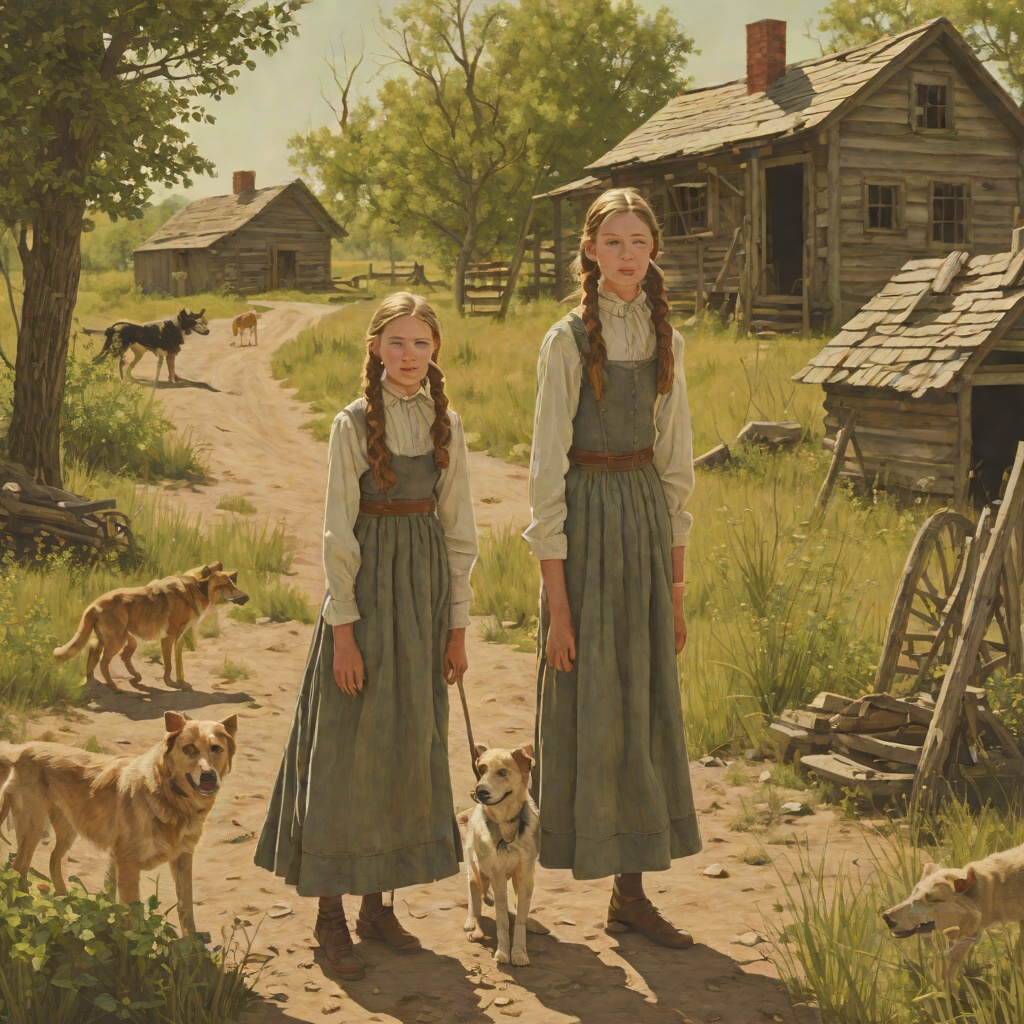
Laura's curiosity about the papoose does not fade with the miles. After the family settled on the High Prairie and Pa began building the little house, Laura returned to the question. While Pa was up on the house wall beginning to put on the roof, she asked, "Pa, when are we going to see a papoose?" Ma was surprised and dismissive, telling Laura to "Put on your hat and forget your crazy ideas." But Laura did not forget. The narrative makes clear that this was Indian country and she wanted to see Indians; she knew she would see them sometime, but she was tired of waiting. This persistent longing sets Laura apart from the adults around her, who view the Indians with a mixture of fear, caution, and political awareness. For Laura, the papoose is not a threat but a promise, an object of pure, childlike desire.
The desire is rooted in the sensory world of the prairie that Laura has come to love. She had already decided she liked the High Prairie best because it was "so wide and sweet and clean." Her days were filled with watching baby prairie chickens running to their mothers and snakes lying still in the sun. The natural world was her classroom, and the papoose was simply the most exotic creature she had yet to imagine. Ma's scolding that Laura and Mary were "getting as brown as Indians in the sun" only deepened the association in Laura's mind between the Indian way of life and the freedom she craved.
The First Encounter and Its Disappointment
When the Indians finally did come to the house, the reality was far more frightening than Laura's imagination had prepared her for. The naked wild men stood by the fireplace while Ma cooked over the fire and Baby Carrie hid her face in Ma's dress. Laura ran towards Ma but was stopped by an awful smell, and she hid behind the table, looking out with one eye. She saw their moccasins, their thin red-brown legs, and the skins of fresh skunks around their waists, with a knife and a small axe in each skin. Their faces were very calm and very fierce, with feathers in the hair at the very top of their heads. This encounter was overwhelming and terrifying, a far cry from the gentle promise of a "little brown Indian baby." The papoose remained unseen, and the reality of the Indians was more alien and more frightening than the word had suggested.
Yet even this frightening encounter did not extinguish Laura's curiosity. The sound of many Indian voices, something like an axe cutting wood or like a dog barking, made her feel strange but not really afraid. It was wild, but it didn't seem angry. Laura's perception of the Indians remained filtered through her child's senses, registering the wildness and the strangeness without the adult judgment of danger. When Ma locked the animals in the stable and brought the family inside, Laura's heart beat fast, but her fear was mixed with fascination.
The Papoose on the Trail of Departure
The full meaning of the papoose finally arrives at the moment of the Indians' departure, when the long line of the tribe rode past the little house. The women and children came riding behind the Indian men. Little naked brown Indians, no bigger than Mary and Laura, went riding by, their straight black hair blowing in the wind and their black eyes shining with happiness. Laura looked and looked at the Indian children, and they looked at her. She had a sudden wish to be a little Indian girl, to ride naked in the wind and the sun. Then Indian mothers came riding by with babies in baskets at the sides of their horses. Laura looked straight into the bright eyes of one little baby, whose eyes were black as a night when no stars shine.
This is the papoose Pa promised her, and the sight overwhelms Laura with longing. "Oh, I want it! I want it!" she cried. "It wants to stay with me. Please, Pa, please!" Pa told her to be quiet, explaining that the Indian woman wanted to keep her baby. Laura began to cry. The little papoose was gone, and she was never going to see it again. Ma was bewildered: "I've never heard of such a thing. Why do you want an Indian baby, of all things?" Laura could only answer, "Its eyes are so black," unable to say what she meant. The moment crystallizes the entire arc of the papoose concept: the promise, the longing, the brief fulfillment, and the permanent loss.
The Significance of the Papoose
The papoose is more than a word for Laura; it is the focal point of her encounter with the Other. Where the adults see danger, political complexity, and the need for appeasement, Laura sees a kindred spirit, a child like herself who rides free in the wind. Her wish to be a little Indian girl is a wish to escape the constraints of her own life, the rules about keeping her hat on and not shouting like an Indian. The papoose represents a freedom that Laura senses but cannot articulate, a life without clothes, without the discipline of the table, without the constant warnings to be quiet. When the papoose disappears, something of that imagined freedom disappears with it. The family stood by the door and looked at the long line of Indians until nothing was left but silence and emptiness, and all the world seemed very quiet and lonely. The papoose, once a promise of wonder, becomes a symbol of the loss that accompanies the family's claim to the land, a loss that Laura feels more acutely than she can express.